
How to Get Around Puglia?
The Ultimate Transportation Guide for International Travelers
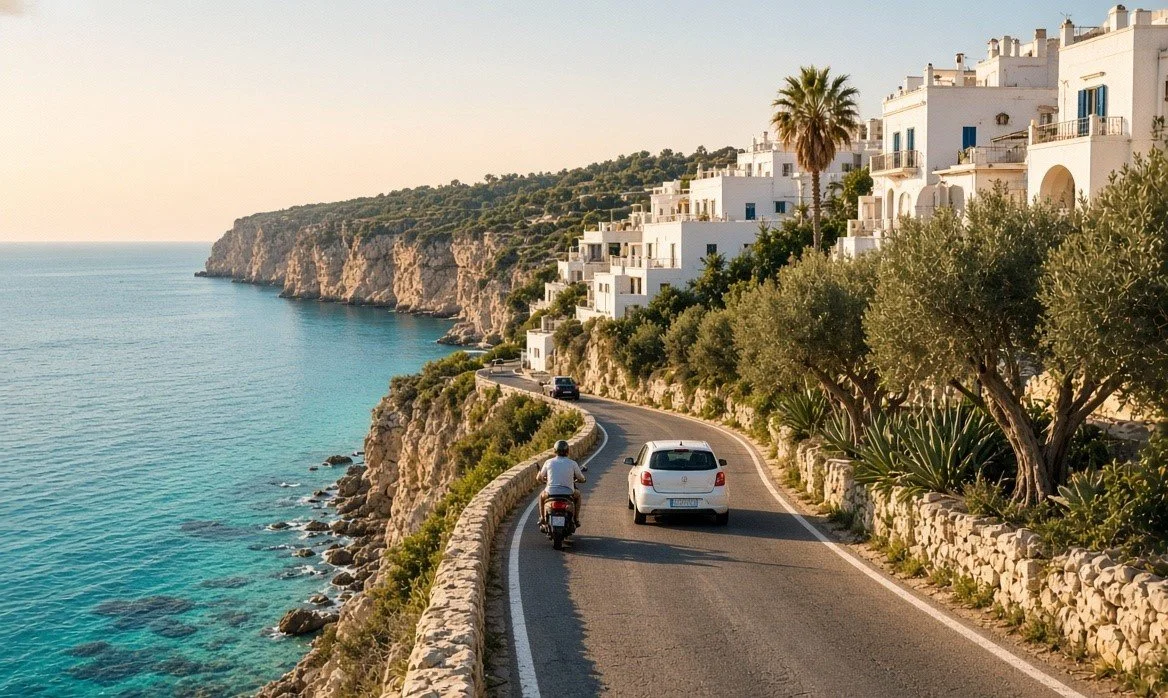
Discover whether you need a rental car or if you can rely on trains and buses. Read our ultimate guide on ZTL rules, parking fees, public transport tips, and private transfers.
Puglia is one of Italy's most breathtaking regions, stretching over 300 kilometers from the sunny Gargano peninsula down to the tip of Salento. However, its long geography and diverse landscape often leave international travelers with one big question: What is the best way to get around Puglia?
Should you rent a car and brave Italian roads, or can you rely entirely on public transport? The answer depends on your itinerary, budget, and travel style. Here is a comprehensive guide to help you navigate Puglia stress-free.
1. Can You Visit Puglia Without a Car?
The short answer: Yes, but only if you stick to the main coastal towns.
If your goal is to visit major hubs along the Adriatic coastline—such as Bari, Polignano a Mare, Monopoli, Brindisi, Otranto, and Lecce—you can easily travel by train. Trenitalia operates frequent regional trains along this corridor, offering a budget-friendly and scenic route.
However, if your dream Puglia itinerary includes:
Staying in a countryside masseria or a secluded trullo.
Exploring the inland villages of the Valle d'Itria (such as Locorotondo, Cisternino, or Ceglie Messapica).
Hopping between remote, pristine beaches in Salento or the Gargano coast.
...then a rental car or private transfers are almost essential.
2. Traveling Puglia by Train and Bus
Using public transit is a great way to save money and avoid driving stress, but it requires advance planning and a bit of flexibility.
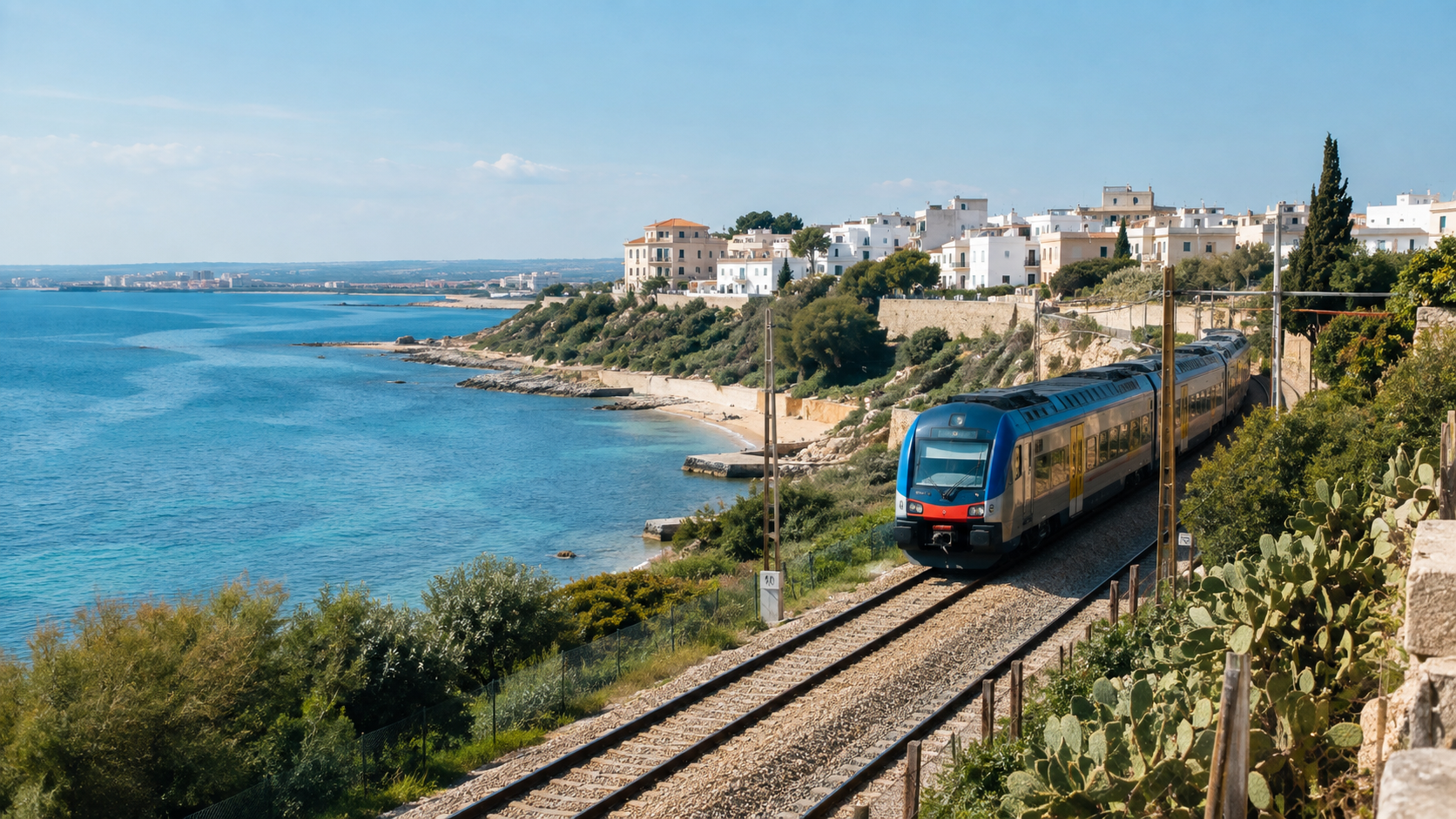
Trenitalia railway runs directly along the coast. Tickets are inexpensive (often between €3 and €12 per ride), and trains along the main line are generally punctual. While Trenitalia is the main operator, Puglia is also extensively served by Ferrovie del Sud Est (FSE), which provides a more capillary network connecting regional gems like Otranto, Gallipoli, and Galatina.
Best train-friendly route: Bari Central → Polignano a Mare → Monopoli → Ostuni* → Lecce.
*Important note on Ostuni: The train station (Ostuni Stazione) is located about 2 kilometers outside the hilltop old town. You will need to take a connecting local STP shuttle bus from outside the station up to Piazza Libertà.
Whatever it is, the way you tell your story online can make all the difference.
Buses & Local Regional Lines
For inland routes or connections to historic towns like Matera or Alberobello, local buses and regional railway networks—such as Ferrovie del Sud Est (FSE)—are available.
⚠️ Public transportation services are significantly reduced (and often non-existent on certain regional lines like FSE) on Sundays and public holidays, regardless of the season. Always double-check weekend schedules in advance using official apps like Trenitalia or Moovit.
3. Renting a Car & Driving in Puglia
Renting a car gives you ultimate freedom to stop at roadside olive oil tastings, discover hidden coves, and travel at your own pace. However, international drivers should keep a few crucial driving rules in mind:
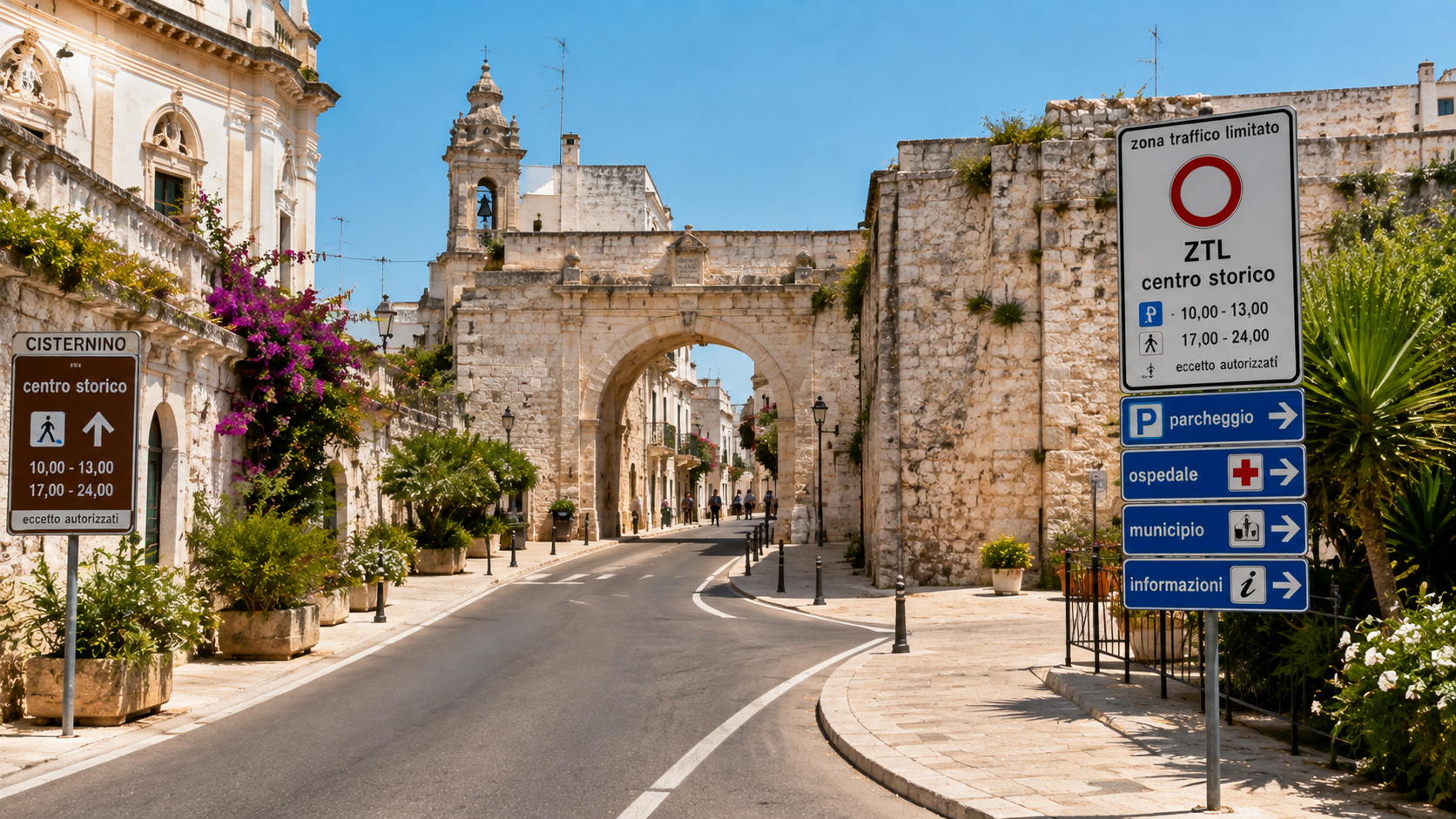
Watch Out for ZTL Zones (Zona a Traffico Limitato)
Most historic town centers (centro storico) in Puglia have restricted traffic zones called ZTL. Only registered residents with permits are allowed to drive into these areas.
Pro Tip: Never drive past a "ZTL" sign or an active camera gate in old towns like Lecce, Monopoli, or Ostuni. Cameras automatically record your license plate, resulting in heavy fines forwarded to your rental agency months later. Always park in marked lots on the perimeter of historic centers.
Speed Traps (Controllo Elettronico della Velocità)
Keep an eye out for signs reading Controllo Elettronico della Velocità. These indicate automated speed cameras along highways (SS16) and rural roads. Stick to posted speed limits to avoid unexpected toll and fine charges.
Parking Lines & Rates
🟦 Blue Lines: Paid parking. You must buy a ticket from a nearby meter (parcometro) and place it clearly on your dashboard, or use apps like EasyPark.
⬜ White Lines: Free parking open to everyone.
🟨 Yellow Lines: Strictly reserved for residents, loading, or disabled permit holders.
Expect to pay around €1.00 to €2.00 per hour in small towns, or €7.00 to €20.00 per day near popular beach resorts during peak summer months.
4. Taxis and Private Transfers
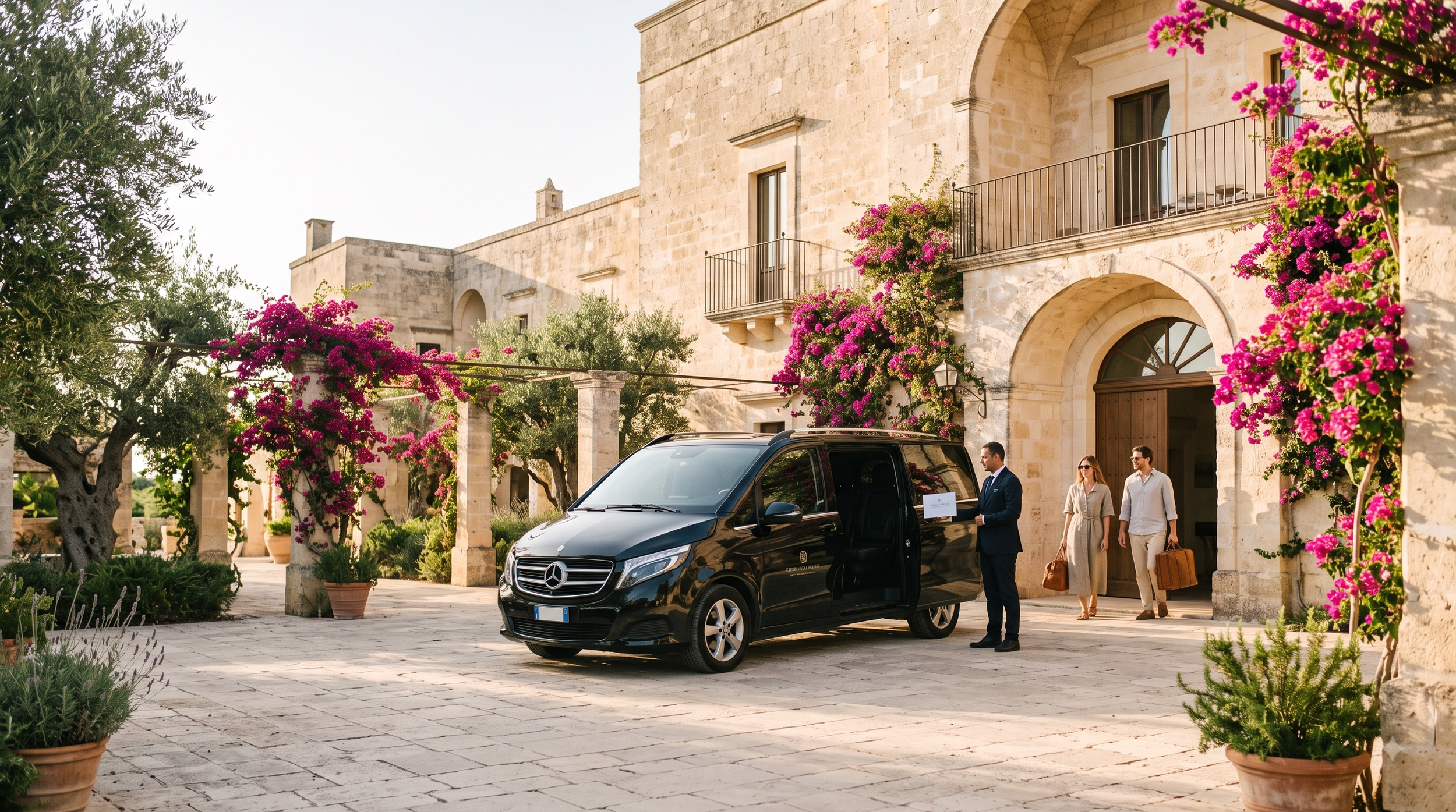
Unlike major international metropolises, you cannot easily flag down a street taxi in smaller Puglian towns. Uber and rideshare services are also extremely limited outside of Bari.
If you prefer not to drive on Italian roads but still want to visit countryside masserie, wineries, or reach early morning flights from Bari (BRI) or Brindisi (BDS) airports, booking private transfers in advance is strongly recommended.
Whatever it is, the way you tell your story online can make all the difference.
Summary: Which Option is Right for You?
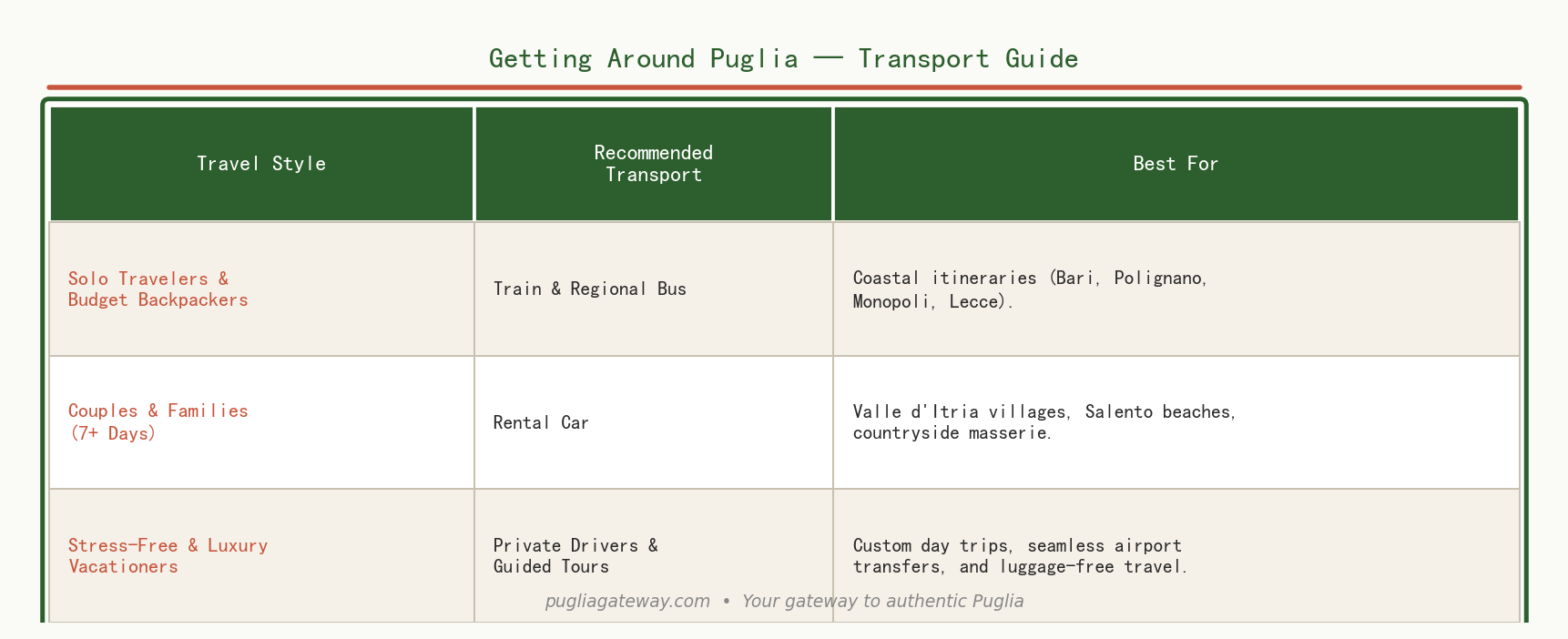
Plan your Puglia journey with experts
Navigating transport schedules, deciphering ZTL signs, or driving unfamiliar country roads shouldn't take away from your holiday bliss. Whether you need seamless private transfers, boutique car rental arrangements, or a fully custom-designed itinerary tailored to your rhythm, our team of local travel specialists is here to make your trip effortless.
Contact Our Travel Specialist Today!
